
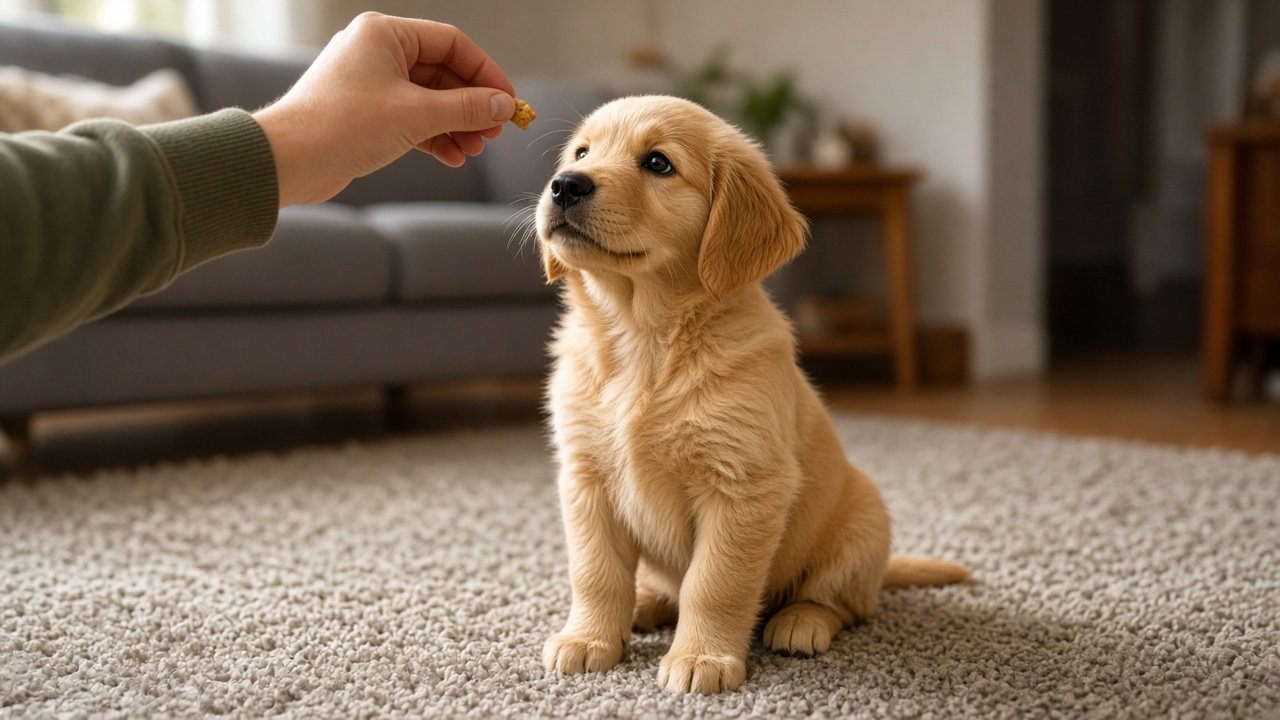
Getting a new puppy is an exciting (but slightly hectic) time. Within one day you will likely find a puddle on the rug, tiny teeth marks on your laces and those big eyes staring at you at 3am looking for attention. Good news is that learning how to train a puppy at home is actually much simpler than most people think! All you need is patience, consistency, a handful of treats and a plan.
This article will show you how to create a plan to help train your puppy. We will cover house training, crate training, basic commands, lead walking, socialisation, stopping them biting and chewing. We also have a simple training schedule based on their age and look at the most common mistakes made.
Before Starting
Training begins from the moment your puppy walks through the door. Here are a few things you will need:
- A crate or small pen that is large enough for your puppy to stand up, turn around and lay down.
- Small soft treats that your puppy loves. The smaller the better!
- A flat collar/harness and 4-6foot lead.
- A variety of chew toys.
A good diet. Puppies with an upset stomach will be harder to house train. If your pup suffers with digestion issues, our guide to the best dog food for sensitive stomachs can help.
Finally agree on the rules in your house. If one person lets your puppy onto the sofa and another doesn’t, your pup will get confused.
How To Train A Puppy At Home: The Core Skills
Break your training down into the following skills. Try to work on them alongside each other. Keep training sessions short (5-10 mins). Always end on a positive.
House Training
Usually the first thing you will want to work on. Puppies have small bladders so will need to go outside frequently. As a general rule, they will be able to hold their bladder for one hour per month of age (up to around 8 hours).
Take them outside frequently. First thing in the morning, after every meal, naps, play and before bedtime.
Take them to the same place. This will help them associate the smell with going to the toilet.
Use a command such as “go potty”.
Reward them immediately. Praise and give a treat within 2 seconds of them finishing.
Supervise them whilst inside. Look out for sniffing, circling or suddenly wandering off.
Clean any accidents up with an enzyme cleaner.
Never scold them for accidents. This will only teach them to be scared of you and hide when they need to go. VCA Animal Hospitals have a great breakdown of how to house train your puppy.
Crate Training
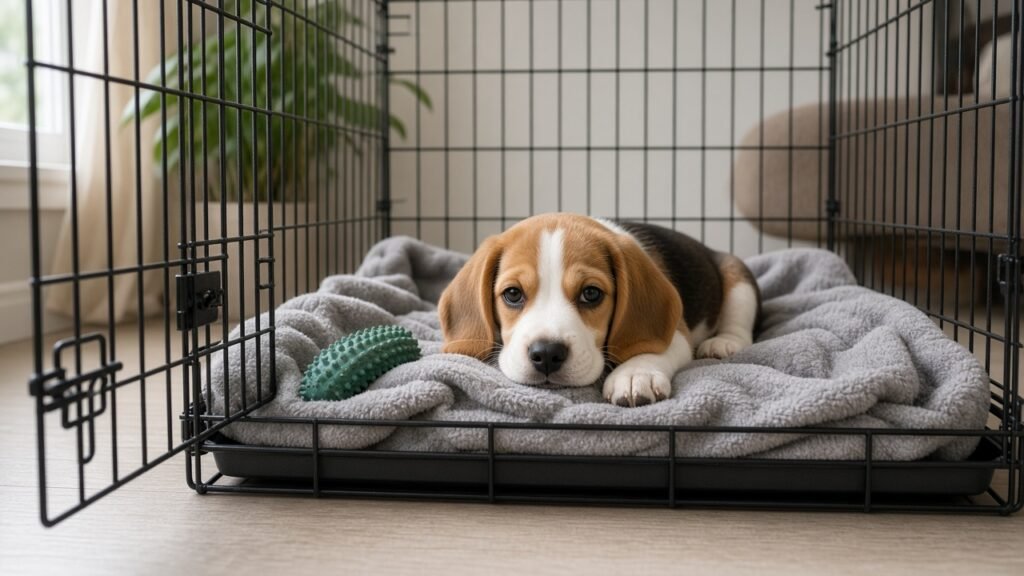
Using a crate is not a punishment. When used correctly, it will become a safe den for your puppy. It will also help with house training as dogs don’t like to go to the toilet where they sleep.
Start by leaving the crate door open. Toss some treats inside so they can investigate.
Feed them inside the crate.
Once they are walking in happily, shut the door for a few seconds. Open again. Gradually increase the amount of time they spend in.
Add a soft blanket and safe chew toy.
Don’t let them out if they are whining. Wait until they are quiet and then open the door.
Young puppies shouldn’t be in their crate for longer than 2-3 hours (except overnight).
Basic Commands (sit, stay, come)
These are the basics and will help with everything else. Use positive reinforcement. Reward the behaviour you want and ignore or redirect the behaviour you don’t.
Sit
- Hold a treat close to their nose.
- Move it slowly up and over their head.
- Their bottom will naturally lower.
- As soon as they sit say “sit” and reward with praise and a treat.
- Repeat a few times throughout the day until they sit on command.
Stay
- Ask them to sit.
- Put your hand out in front of them and say “stay”.
- Take a step back. If they stay, take a step back in and reward. Release them with a word such as “okay”.
- Gradually increase the distance and time. If they lose focus, go back to an easier step.
Come
- This can help keep your dog safe. Make it the best word they know!
- Start with a few distractions. Begin inside.
- Get down to their level and say their name and “come” in a cheerful tone.
- Celebrate when they come to you with a high value treat.
Never call them to you for something they don’t like such as a bath or nail trim. This will teach them that coming to you is not a good thing.
Lead Training
Puppies don’t know how to walk nicely on a lead so start inside.
Let them wear their collar/harness for short amounts of time.
Attach the lead and let them drag it around (under supervision) for a few minutes.
Pick up the lead and reward them every time they walk beside you.
If they pull, stop and stand still. Only move forward once the lead is slack.
Change direction frequently so they learn to pay attention to you.
Keep early walks short. Their joints are still developing so a few minutes of focused training will teach them more than a long tiring walk.
Socialisation
Between around 3-14 weeks old is a key time for socialisation. Everything they experience will affect how confident they are as an adult. The American Kennel Club have a great breakdown on why the first few weeks are so important for training your puppy.
Introduce them gently to:
- Different people (children, adults, wearing hats/glasses)
- Friendly and vaccinated dogs.
- Sounds in the house (vacuum, doorbell, traffic).
- Different surfaces (grass, tiles, stairs).
- Being touched (paws, ears and mouth).
Bathing them will also be part of this. Having short calm baths will make bath time much easier later. If you are unsure how often to bathe them, read how often should I bathe my dog.
Always keep everything positive and work at their pace. If they look scared, increase the distance and reward them.
Stopping Biting And Chewing
Puppies like to explore the world with their mouths. They will also want to chew everything due to teething. This is completely normal but can be guided.
Nipping
- If they nip you, say “ouch” in a calm tone and stop playing with them for 10-20 seconds.
- Give them a toy to chew.
- Avoid any rough games that encourage them to bite your hands.
Destructive Chewing
- Puppy proof your home. Hide any cables, shoes or small items.
- Rotate their chew toys.
- Freeze their chew toys or use a damp frozen washcloth to help soothe any sore gums.
- If you catch them chewing something they shouldn’t, swap it for a toy and praise them.
A tired puppy is a well behaved puppy! Getting them to play and mentally stimulate will reduce any unwanted chewing. The same can be applied to noise. If your pup has become a little too vocal, our tips on how to stop your dog barking work well for young dogs.
Puppy Training Schedule
Every puppy will learn at their own pace but here is a realistic schedule.
| Age | Focus | Tips |
|---|---|---|
| 8-10 weeks | Name recognition, house training, crate introduction, gentle handling | Potty every 1-2 hours. Keep sessions short (3-5 mins). |
| 10-12 weeks | Sit, bite inhibition, introducing collar/lead, socialisation | Introduce new noises, people and surfaces everyday. |
| 3-4 months | Stay, come, basic lead walking, longer time in crate | Consider a puppy class after vaccinations. |
| 4-6 months | Down, leave it, practicing commands with distractions | Teething peak so provide lots of chew toys. |
| 6-12 months | Reinforce all skills, longer stays, outdoor recall | Teenage phase. Be consistent. |
Common Mistakes
Even the most loving of owners can fall into these habits.
Not being consistent. Using different commands or rules.
Long sessions. Puppies have short attention spans. Multiple short sessions are better.
Scolding. This will affect trust and usually make the behaviour worse.
Not rewarding. Reward within a second or two or your puppy won’t associate the behaviour.
No socialisation. Leaving it too late can cause them to be fearful as an adult.
Too much freedom. Letting them roam the house before they are house trained will cause accidents.
Expecting perfection. It is normal for things to go wrong. Go back a step and try again.
FAQs
At what age should I start training my puppy?
You can start training the day you bring them home (usually around 8 weeks old). You can begin with simple commands such as name recognition, potty training and crate training.
How long does it take to house train a puppy?
Most puppies will be reliably house trained between 4-6 months old. However some may take up to a year. Being consistent and having a routine will make the biggest difference.
How long should I train my puppy for?
Try to spend 2-3 short sessions (5-10 mins). Everyday you can train them by asking them to sit before meals.
What treats should I use?
Small soft smelly treats work best. Chop them up into pea sized pieces so they don’t get full too quickly. If they suffer with sensitive tummies, use pieces of their usual kibble.
Can I train my puppy at home?
Yes! Most basic training can be done at home. A puppy class can help with socialisation. If you have any issues such as severe aggression or fear, it is worth contacting a professional trainer.
Conclusion
Learning how to train a puppy at home doesn’t need to be perfect. All you need to do is be patient, use clear signals and lots of rewards. Start with house training and crate training. Add sit, stay and come. Work on lead manners and make socialisation a daily routine. Redirect any biting and chewing. Follow a training schedule based on their age.
There will be accidents, chewed socks and days where nothing seems to be working. This is normal. Be patient and in a few months you will have a confident well mannered companion and a bond that will last a lifetime.